
Crop Propagation · 3 min read
Sexual propagation: seeds
Listen to this lesson
A calm voice reads the lesson aloud
Tap any word for its meaning, or to have that part explained further.
Sexual propagation by seeds
A farmer in Kaduna can plant maize grains to raise new maize plants. Growing crops from seeds is called sexual propagation.
Sexual propagation is the production of new plants from seeds.
In simple words, a seed grows into a new plant. In sexual reproduction, the male and female sex cells join during fertilisation, leading to seed formation.
How seeds form
In flowering crops, pollination is the transfer of pollen grains from the anther to the stigma. Fertilisation follows when a male sex cell joins a female sex cell. The fertilised ovule develops into a seed, while the ovary usually develops into a fruit.
Parts of a seed
Embryo: the young plant inside the seed. • Cotyledon: the seed leaf; it may store food, as in cowpea. • Seed coat: the outer covering that protects the seed. • Stored food: feeds the young plant before it can make enough food.
Seeds used on Nigerian farms
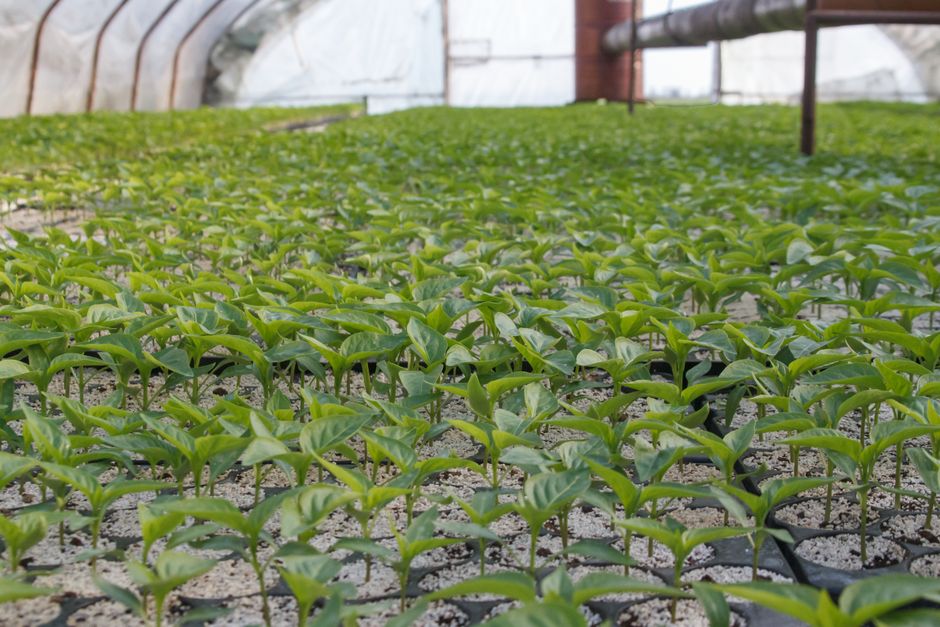
Maize, rice and cowpea are commonly grown by sowing seeds directly in the field. • Tomato and pepper seeds are often sown in a nursery first. The seedlings are later moved to the field.
Germination
When a living seed gets suitable conditions, its embryo starts growing. This beginning of growth is called germination.
Germination is the development of the embryo of a seed into a seedling.
Simply put, the young plant inside the seed begins to grow out. The radicle develops into the root, while the plumule develops into the shoot.
Conditions and planting steps
Seeds need water, oxygen and a suitable temperature to germinate. Some seeds also need particular light conditions. • Choose mature, healthy, viable seeds. Viable seeds are seeds capable of germinating. • Prepare a good seedbed and sow at the correct depth and spacing for the crop. • Keep the soil moist, not waterlogged. Too much water reduces the oxygen available to seeds.
Advantages of using seeds
Seeds of many crops are easy to carry and store when properly dried. • Many plants can be raised from seeds. • Seed-grown plants often develop strong root systems. • Sexual reproduction produces variation that plant breeders can use to develop improved varieties.
Disadvantages of using seeds
Seed-grown plants may differ from their parents in useful qualities. • Some fruit trees grown from seeds take longer to bear fruit than those raised by grafting. • Some seeds remain dormant and need treatment before germination. • Seed propagation is unsuitable for crops that do not produce viable seeds.
Key points
- •Sexual propagation is the production of new plants from seeds.
- •Maize, rice, cowpea, tomato and pepper can be propagated by seeds.
- •The embryo develops into a seedling during germination.
- •Germination requires water, oxygen and a suitable temperature.
- •Seed propagation can produce many plants, but the plants may differ from their parents.