
Animal Reproduction and Breeding · 3 min read
Oestrous cycle and mating
Listen to this lesson
A calm voice reads the lesson aloud
Tap any word for its meaning, or to have that part explained further.
Oestrous cycle and mating
A mature cow, goat or sow does not accept a male for mating every day. She normally accepts him during heat, also called oestrus. For example, a farmer in Kaduna watches female goats for signs of heat before allowing a buck to mate with them.
Oestrous cycle is the interval between two successive periods of heat in a female animal.
Simply, it is the time from the beginning of one heat period to the beginning of the next. If the animal does not become pregnant, this cycle usually repeats.
Stages of the oestrous cycle
Pro-oestrus: Egg-containing follicles grow in the ovary. The hormone oestrogen rises, and the female prepares for heat.
Oestrus: This is the heat stage. The female accepts the male for mating.
Metoestrus: Heat ends, and the corpus luteum begins to develop from the follicle that released an egg. The corpus luteum produces progesterone.
Dioestrus: The corpus luteum is active. Progesterone helps keep the womb ready for pregnancy. If pregnancy does not occur, the corpus luteum breaks down and another cycle begins.
Signs and length of heat cycles
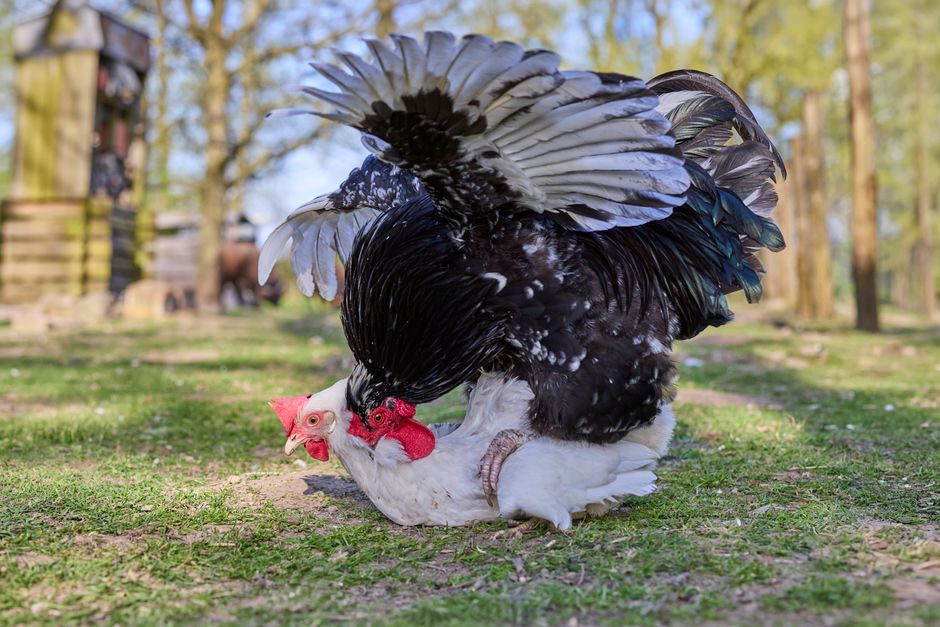
The female may become restless and make frequent sounds. • The vulva may become swollen and release clear mucus. • She may mount other animals. • In cattle, standing still to be mounted is a reliable sign of heat.
Average cycle lengths differ among animals. • Cow: About 21 days. • Sow: About 21 days. • Goat: About 21 days. • Sheep: About 17 days.
Do not confuse cycle length with heat duration. A cow's whole cycle averages 21 days, but her heat usually lasts about 12–18 hours.
Mating and breeding
During natural mating, the male deposits semen in the female reproductive tract. Semen contains sperm cells.
Mating is the act of sexual intercourse between a male and a female animal.
Simply, mating allows sperm to enter the female. Pregnancy may follow if a sperm fertilises an egg and the young animal begins to develop. Mating does not always result in pregnancy.
Natural mating: A male serves a female directly, such as a buck mating with a doe on a goat farm in Oyo. • Artificial insemination: A trained person places collected semen in the female reproductive tract using equipment. It is an alternative to natural mating.
Good breeding practice
Check females for heat regularly, especially in the morning and evening. • Arrange mating or insemination at the right time in relation to heat and egg release. • Select healthy breeding animals with useful traits, such as good growth or high milk yield. • Avoid mating close relatives because harmful inherited traits may appear in their young. • Record heat dates, mating dates and the male used.
Key points
- •The oestrous cycle runs from the beginning of one heat period to the beginning of the next.
- •The four stages are pro-oestrus, oestrus, metoestrus and dioestrus.
- •A female normally accepts the male during oestrus.
- •The average cycle is 21 days in cows, sows and goats, but 17 days in sheep.
- •Heat detection, healthy breeding animals and good records improve breeding success.