
Livestock Management · 3 min read
Housing of farm animals
Listen to this lesson
A calm voice reads the lesson aloud
Tap any word for its meaning, or to have that part explained further.
Housing of farm animals
Farm animals need suitable places to rest, feed and stay safe. On a farm in Ibadan, chickens may stay in a poultry house, while pigs stay in a pigsty.
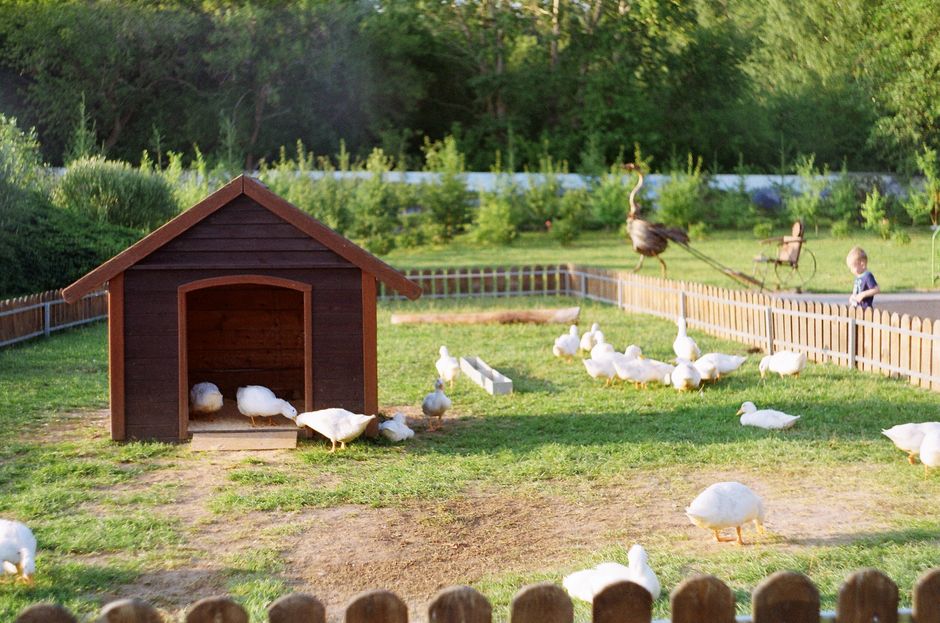
Housing is the provision of shelter for farm animals.
Simply put, housing means providing a suitable shelter where animals can live safely and comfortably.
Why animals need housing
It protects animals from heavy rain, hot sun and strong wind. • It protects them from thieves and predators, such as snakes. • It makes feeding, cleaning and disease control easier. • It helps farmers collect eggs and manure easily.
Choosing a good site
Choose dry, raised land with good drainage to prevent flooding. • Ensure a steady supply of clean water. • Choose a place that is easy to reach for feeding and selling farm products. • Avoid swampy areas and places close to homes where smell may disturb people.
Features of good animal housing
Ventilation allows fresh air to enter and bad air to leave. • Enough space prevents overcrowding. • A strong roof keeps out rain and reduces heat. • Floors should be easy to clean and should not be slippery. • Provide enough feeders, drinkers and light. • Use strong walls or fencing to keep animals safe.

Direction and building materials
In hot parts of Nigeria, the long side of an animal house often runs east to west to reduce direct sunshine entering the sides. Also consider the direction of wind. Farmers may use blocks, wood, wire mesh and roofing sheets, depending on the animal and available money.
Housing for poultry
In the deep-litter system, chickens stay on a floor covered with dry materials, such as wood shavings or rice husks. • In the battery-cage system, laying hens stay in cages fitted with feeding and watering facilities. • A brooder house provides warmth and protection for young chicks.
Housing for other farm animals
Pigs stay in a pigsty with shade, good drainage and a strong, non-slippery floor. • Cattle may stay in sheds with enough space, shade and feeding areas. • Sheep and goats need dry, well-ventilated pens; raised floors can help keep them dry in wet areas. • Rabbits stay in hutches that are shaded, well-ventilated and easy to clean.
Care of animal houses
Remove dung and leftover feed regularly. • Wash feeders and drinkers. • Keep litter dry and replace wet or badly soiled parts. • Repair leaking roofs, broken fences and damaged floors. • Clean and disinfect houses between groups of animals. • Keep sick animals in a separate pen.
Common housing mistakes
Overcrowding, wet litter and poor ventilation encourage disease. A leaking poultry house in Enugu can make litter wet, while a poorly shaded goat pen in Kano can expose goats to too much heat.
Key points
- •Housing provides shelter for farm animals and makes their management easier.
- •A good site is dry, well-drained and supplied with clean water.
- •Good housing provides enough space, fresh air, shade and protection.
- •Different animals need suitable houses, such as poultry houses, pigsties, cattle sheds and rabbit hutches.
- •Regular cleaning, dry litter and separation of sick animals help control disease.