
Farm Tools and Machinery · 3 min read
Simple farm tools
Listen to this lesson
A calm voice reads the lesson aloud
Tap any word for its meaning, or to have that part explained further.
Simple Farm Tools
On a small farm in Nigeria, a farmer may use a hoe to weed maize or a cutlass to clear grass. These tools help the farmer work with the hands.
Meaning of Simple Farm Tools
Simple farm tools are basic hand-operated implements used to carry out farm operations.
This means they are simple tools that a farmer uses by hand for jobs such as clearing, digging, planting and weeding. They do not need an engine.
Common Tools and Their Uses
Cutlass: Used for clearing bushes, cutting small branches and harvesting sugar cane. • Hoe: Used for weeding, loosening soil and making ridges or heaps for crops such as yam.
Spade: Used for digging and turning soil. Its blade is usually flat and fairly rectangular. • Shovel: Used for scooping and moving loose soil, sand or manure. Its blade is usually broad and slightly curved.
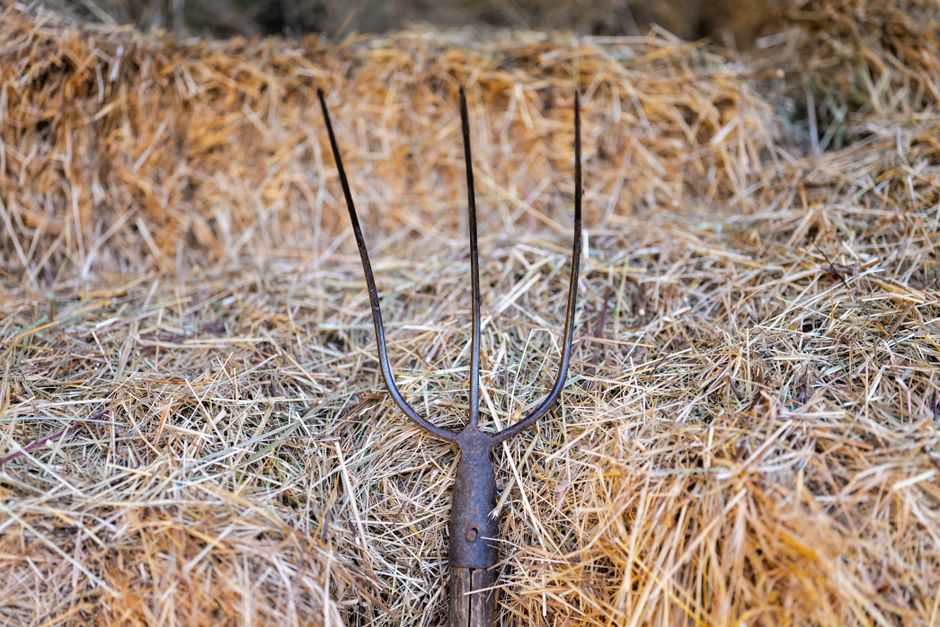
Rake: Used for gathering leaves and rubbish, breaking small soil clods and levelling seedbeds. • Garden fork: Used for loosening soil and turning compost. It has strong, pointed prongs.
Hand trowel: Used for making small planting holes and transplanting vegetable seedlings. • Hand fork: Used for loosening soil and removing small weeds around plants.
Watering can: Used for watering seedlings and vegetables. Its rose is the perforated head that spreads water gently. • Wheelbarrow: Used for carrying manure, soil, harvested crops and tools.
Sickle: Used for cutting grasses and harvesting cereal crops such as rice. It has a curved blade. • Secateurs: Used for pruning small branches. • Axe: Used for felling small trees and splitting wood.
Choosing the Right Tool
Choose a tool that suits the job. For example, use a hand trowel to transplant tomato seedlings on a Kano vegetable farm. Use a wheelbarrow, not a watering can, to carry compost.
Care of Farm Tools
Remove soil and plant remains after use. Wash tools when necessary and dry them well. • Sharpen cutting edges when needed. • Apply a light coat of oil to exposed metal parts before storage to reduce rusting. • Repair or replace loose and broken handles. • Store tools neatly in a dry tool shed.
Safety When Using Tools
Check that handles are firm before use. • Keep other people away when swinging a cutlass or axe. • Wear suitable boots and other protective clothing. • Never leave sharp tools on paths or rake teeth pointing upwards. • Carry sharp tools carefully, with the cutting edge away from your body.
Key points
- •Simple farm tools are operated by hand and do not need an engine.
- •Each tool has suitable jobs: a hoe weeds, a rake levels seedbeds, and a wheelbarrow carries loads.
- •A spade is mainly used for digging, while a shovel is mainly used for moving loose materials.
- •Cleaning, drying, oiling and proper storage help tools last longer.
- •Firm handles and careful handling help prevent farm accidents.