
Irrigation and Drainage · 3 min read
Meaning and methods of irrigation
Listen to this lesson
A calm voice reads the lesson aloud

Tap any word for its meaning, or to have that part explained further.
Meaning of irrigation
Rain may not give crops enough water, especially during the dry season. Farmers can supply extra water to help their crops grow.
Irrigation is the artificial application of water to the soil for crop production.
Simply put, irrigation means supplying water to farmland instead of depending only on rainfall. For example, a tomato farmer in Kano may pump water from a well to water the farm.
Why irrigation is important
It makes dry-season farming possible. • It supplies water when rainfall is insufficient. • It helps crops grow well and can increase yield.
Methods of irrigation
The main methods are surface irrigation, sprinkler irrigation, drip irrigation and subsurface irrigation.
Surface irrigation
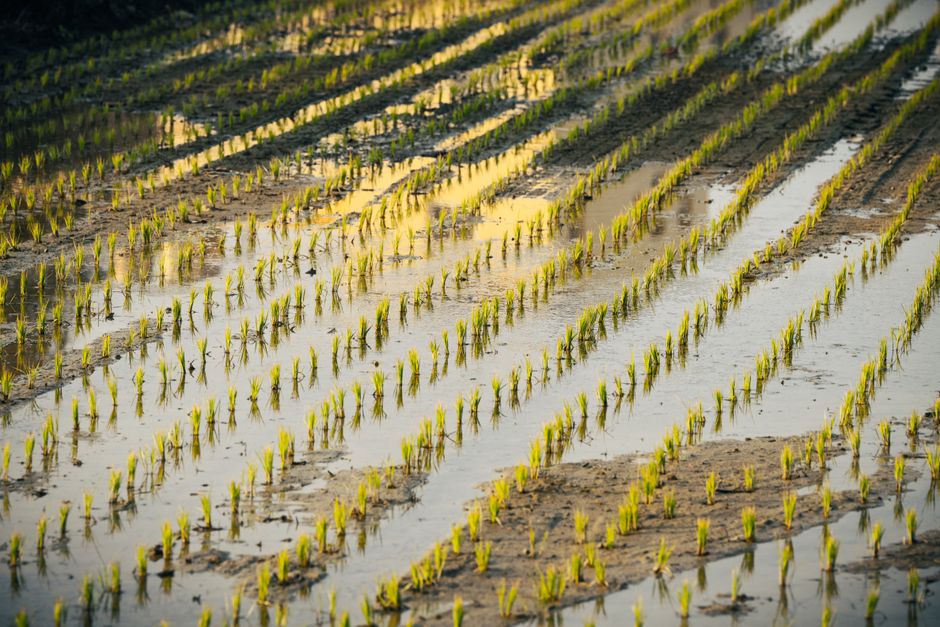
In surface irrigation, water flows over the soil by gravity. The land should be fairly level or gently sloping. • Flooding spreads water over the field, as in some rice fields. • Furrow irrigation sends water through small channels between crop rows, such as rows of maize. • Basin irrigation holds water within small earth banks around a level area or a tree.
Sprinkler irrigation
In sprinkler irrigation, a pump pushes water through pipes to sprinkler heads. These spray water over crops like rain. It can water vegetables, but strong wind may blow the spray away, and the equipment can be costly.
Drip irrigation
In drip irrigation, pipes deliver water slowly, drop by drop, near each plant’s roots. A pepper farmer in Oyo State can use it to save water. However, the small outlets can become blocked by dirt.
Subsurface irrigation
In subsurface irrigation, water is supplied below the soil surface so that it reaches the root zone. Buried pipes may be used. Installation can be costly, and the soil must allow water to move towards the roots.
Choosing a suitable method
Consider the crop, soil type, slope of the land, water supply and cost. • Apply enough water, but avoid waterlogging, which leaves too little air around roots. • Remember: irrigation adds water, while drainage removes excess water.
Key points
- •Irrigation supplies water artificially to the soil for crop production.
- •The main methods are surface, sprinkler, drip and subsurface irrigation.
- •Surface irrigation includes flooding, furrow and basin irrigation.
- •Drip irrigation supplies water slowly near plant roots and helps save water.
- •The choice of method depends on the crop, soil, land slope, water supply and cost.