Systems of Government · 5 min read
Presidential system
Listen to this lesson
A calm voice reads the lesson aloud

Tap any word for its meaning, or to have that part explained further.
Kedu ka a na-eme? (How are you doing?) Class, today we're going to learn about a very important way a country can be run: the Presidential System of Government.
Imagine Nigeria, our great country. We have a President, right? That's a big clue about what we'll discuss.
A Presidential System of Government is a system where the executive arm of government (the President and his team) is separate from the legislative arm (the National Assembly, which makes laws).
Let's break that down. 'Executive' means the people who *execute* or carry out the laws. In Nigeria, that's President Bola Ahmed Tinubu and his ministers.
'Legislative' means the people who *legislate* or make the laws. In Nigeria, that's the Senate and the House of Representatives.
The key thing is that these two groups (President and National Assembly) are independent of each other. They don't control each other directly.
Another textbook definition: "In a presidential system, the head of government is also the head of state."
What does this mean for us? Our President, for example, is both the leader of the government (he runs the country day-to-day) and the symbol of the country (he represents Nigeria to the world).
He doesn't share these roles with anyone else, unlike in some other systems where a Prime Minister runs the government and a King or Queen is the head of state.
Another important feature: "The executive (President) is elected independently of the legislature."
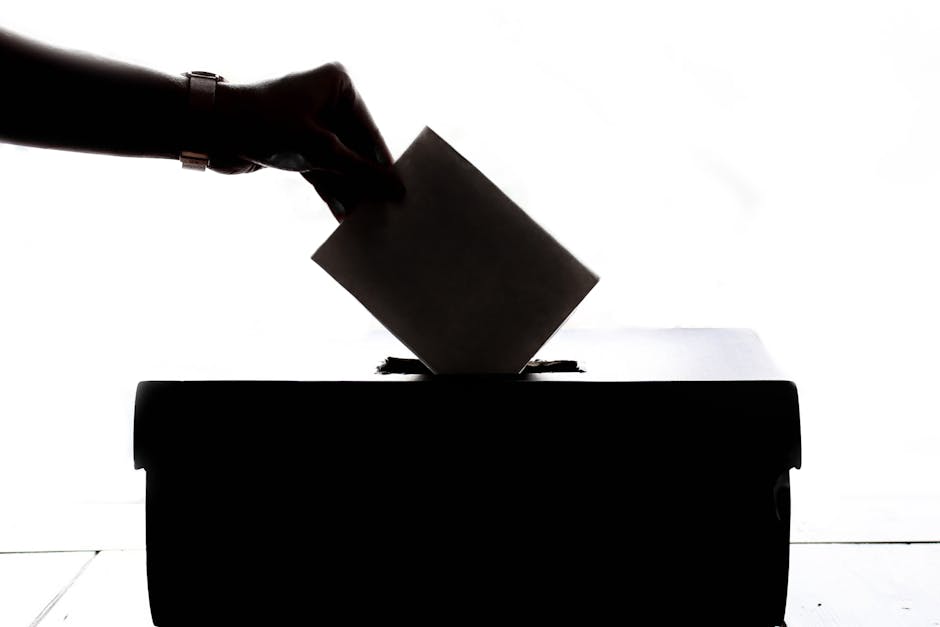
Think about it. When Nigerians go to vote, we vote directly for the President, not for a party that then chooses a President.
And we also vote for our Senators and House of Representatives members separately.
The President then appoints his ministers, usually from outside the National Assembly. These ministers are responsible to the President, not directly to the Assembly.
A key characteristic is that the President serves for a fixed term of office.
In Nigeria, our President is elected for a four-year term. He cannot be removed by a simple vote of no confidence from the National Assembly, like in some other systems.
He can only be removed through a difficult process called impeachment, which usually involves serious misconduct.
This fixed term provides stability. The President knows he has four years to implement his plans, unless something really bad happens.
Examples of countries using this system include Nigeria, the United States of America, Brazil, and Ghana.
Nigeria adopted the Presidential System in 1979, with the Second Republic, and it has been in use since the return to democracy in 1999.
This system promotes separation of powers and checks and balances.
Separation of powers means different arms of government (Executive, Legislature, Judiciary) have distinct roles and powers.
Checks and balances mean each arm has some power to limit or 'check' the others, so no one arm becomes too powerful.
For example, the National Assembly must approve the President's budget and can investigate his actions.
Also, the President can veto (reject) bills passed by the National Assembly, but the Assembly can override his veto with a two-thirds majority.
The Supreme Court, the Judiciary, can declare laws or presidential actions unconstitutional.
So, while they are separate, they also watch over each other to ensure good governance. This helps prevent abuse of power, like an Abacha-era scenario.
However, this system can sometimes lead to gridlock, where the President and National Assembly disagree and little gets done.
Imagine the President is from APC and the National Assembly is dominated by PDP. They might find it hard to agree on policies.
Also, the President can become very powerful, especially if his party controls the National Assembly. This is sometimes called an imperial presidency.
In summary, the Presidential system gives us a directly elected leader with a fixed term, separate from law-makers, and a system of checks and balances.
It's the system we use here in Nigeria, and understanding it is key to understanding our politics. E don clear? (Is it clear?)
Keep studying, future leaders! God bless Nigeria!
Key points
- •The Executive and Legislative arms of government are separate and independent.
- •The Head of Government is also the Head of State (e.g., the President).
- •The President is directly elected by the people for a fixed term of office.
- •Ministers are appointed by the President and are responsible to him.
- •The system promotes separation of powers and checks and balances.
- •Examples include Nigeria, USA, Brazil.